
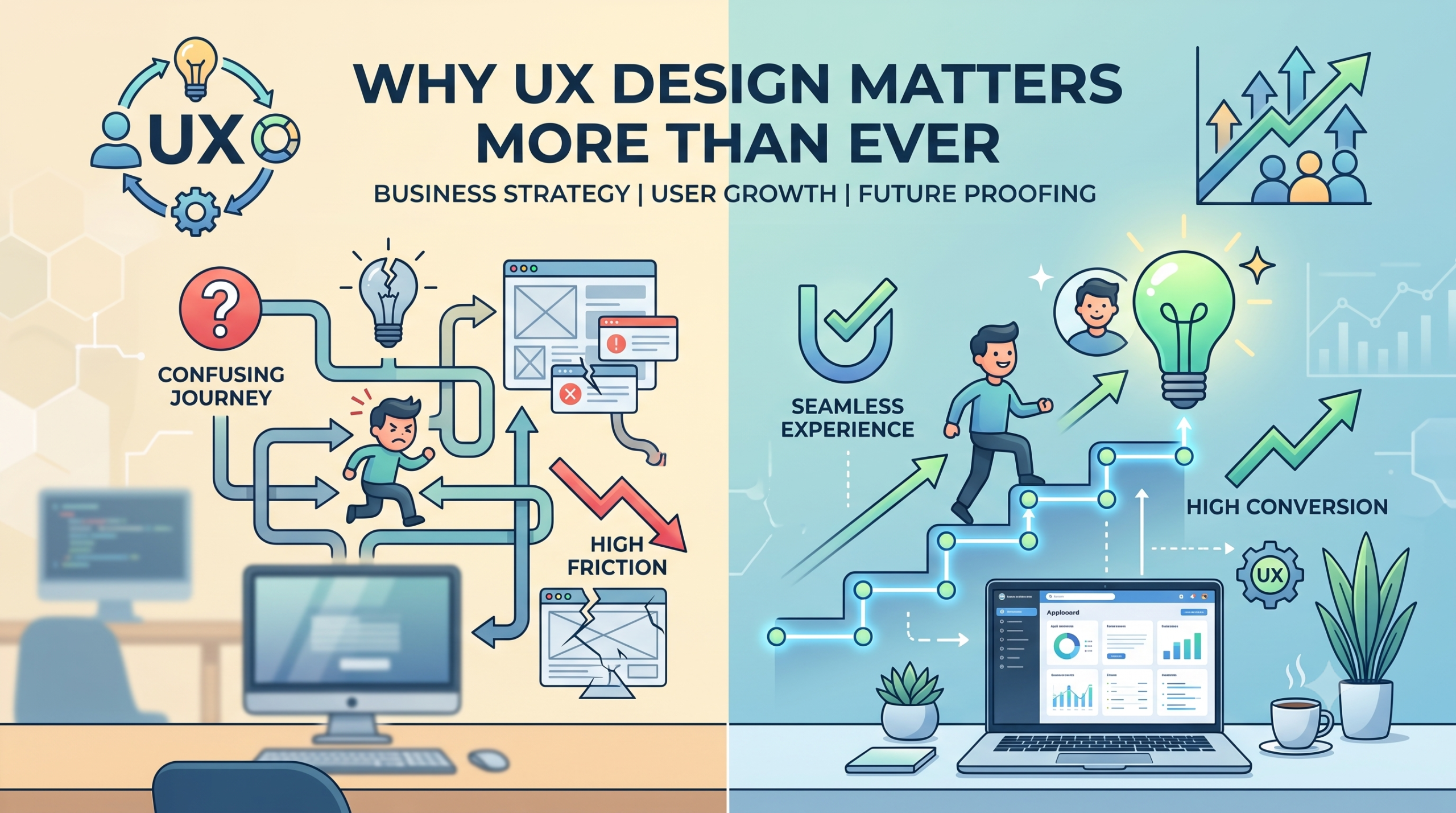
It is easy to treat UX design as a cosmetic layer applied after the real engineering work is done. That framing costs businesses more than most realize.
UX is a conversion and retention lever
Every extra step, unclear label, or confusing form field is a small tax on your conversion rate. Over thousands of visits, that tax adds up to real revenue left on the table. Good UX design is not about making things pretty; it is about removing friction between a user’s intent and the outcome they want.
Design systems reduce long-term cost
A consistent design system, shared components, spacing rules, and interaction patterns, means new features ship faster and look coherent without every screen being designed from scratch. Teams that skip this step often pay for it later in inconsistent interfaces and slower development.
Prototypes catch problems before code does
Validating a flow with an interactive prototype is far cheaper than discovering the same problem after a feature has been built, tested, and deployed. It also gives non-technical stakeholders a concrete way to give feedback before development starts.
The takeaway
Treat UX design as part of your product strategy, not a final polish step. The businesses that do this consistently see it reflected in lower support volume, higher conversion, and faster onboarding.