
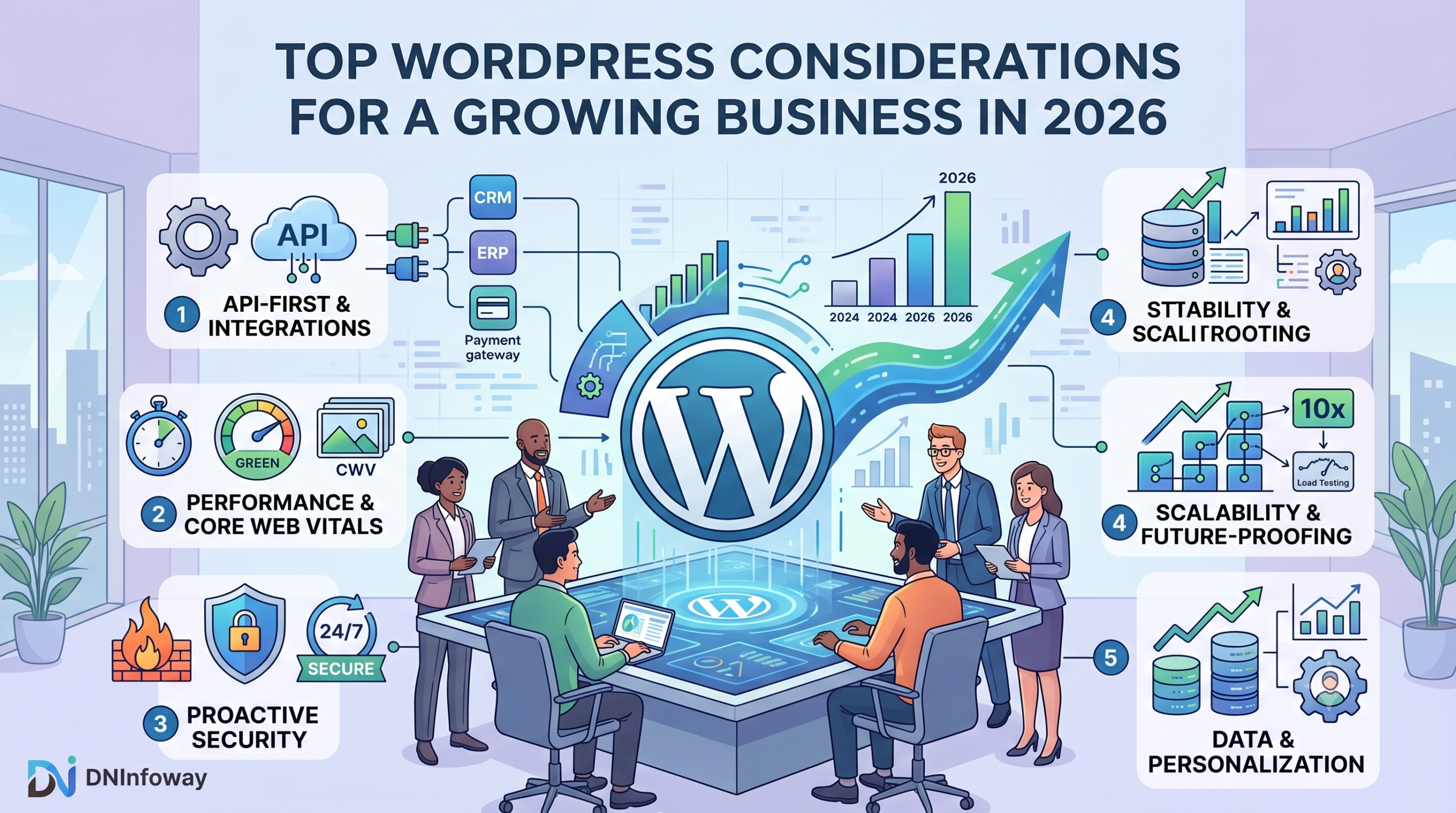
WordPress still powers a large share of the web, but the sites that perform well at scale share a few deliberate technical decisions in common.
Start with a lean, purpose-built theme
A heavy, feature-bloated theme is one of the most common sources of slow page speed. A custom or purpose-trimmed theme that only loads what a given page actually needs will outperform a generic multi-purpose theme almost every time.
Treat custom post types as real data models
Services, case studies, testimonials, and similar content are not just blog posts with a different label. Structuring them as custom post types with their own fields keeps your content organized, makes it reusable across templates, and keeps your database clean as the site grows.
Audit your plugin stack regularly
Every plugin is a dependency with its own maintenance history and security surface. A quarterly audit of what is actually in use, and removal of anything that is not, is a low-effort habit that pays off in both performance and security.
Plan for caching and image delivery early
Page caching, a sensible image pipeline, and lazy loading are not optional extras for a business site that expects real traffic. Building these in from the start avoids a painful retrofit later.
The bottom line
WordPress is a capable platform for serious business software when the foundation, theme, content structure, and performance pipeline, is built with intent rather than assembled from defaults.