
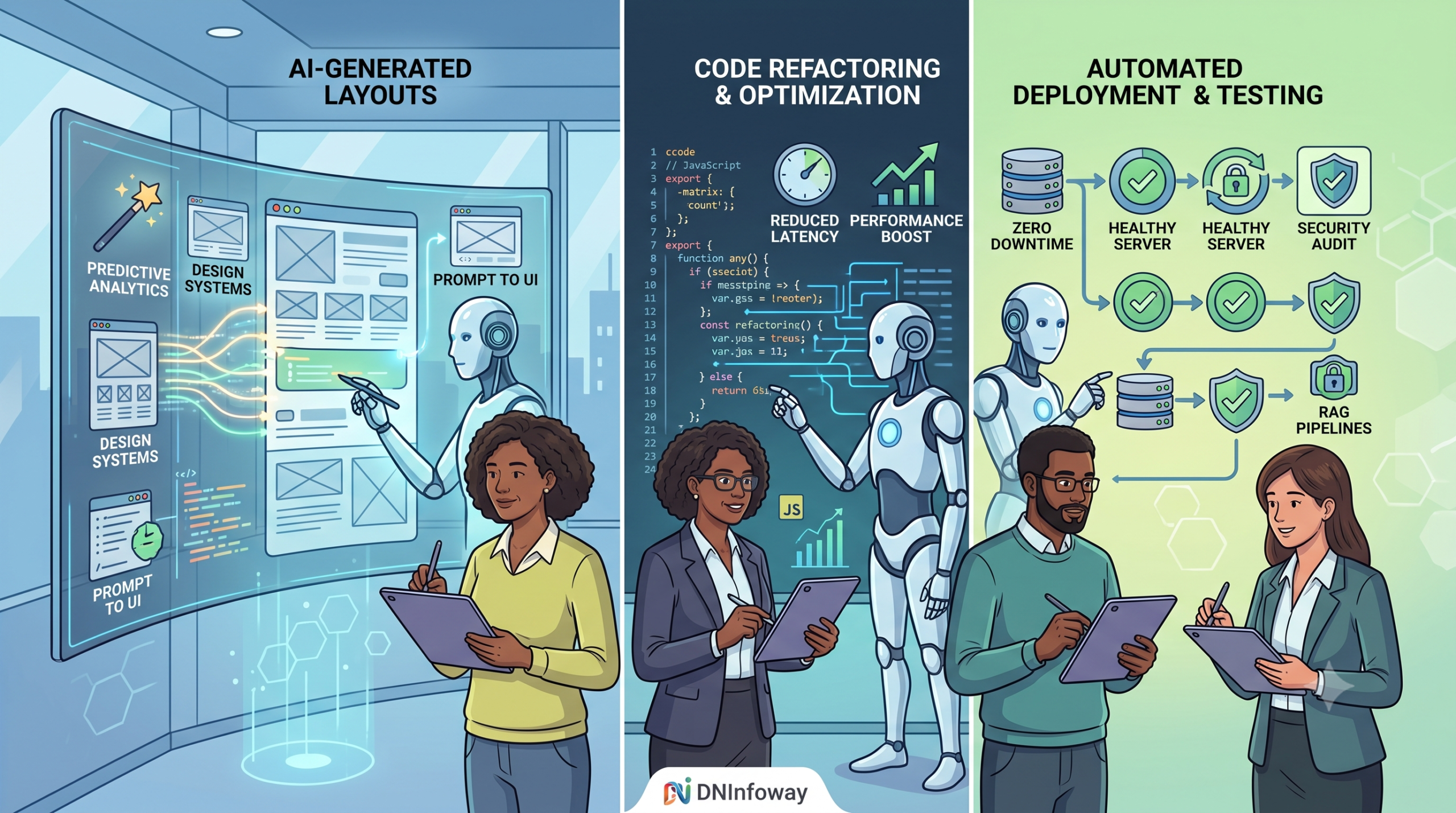
AI has moved from a novelty feature to an expected part of serious web products, but the useful version of that shift looks different from the demo-reel version.
From chatbots to scoped agents
Early AI integrations were often a chat widget bolted onto an existing site. The more durable pattern now is a scoped agent: a system with a defined set of tools it can call, clear boundaries on what it can act on, and a human escalation path for anything ambiguous. That distinction matters because it is the difference between a feature that looks impressive in a demo and one that survives contact with real customers and real data.
Retrieval matters more than the model
Most businesses do not need a smarter general-purpose model. They need their existing, proprietary knowledge, policies, product data, support history, made available to a system that can answer questions grounded in that material. That is retrieval-augmented generation, and it is usually more valuable than any single model upgrade.
Where AI still needs guardrails
Automating a workflow without an audit trail, a review step, or a way to hand off to a human is a common failure mode. The teams getting real value from AI integration are the ones treating it like any other production system: version it, monitor it, and give it a rollback plan.
What this means for your roadmap
If you are evaluating where AI fits into your product, start with the workflows that are repetitive, well-documented, and low-risk to automate first. That is where the return on investment is fastest, and it builds the operational muscle needed before tackling higher-stakes automation.